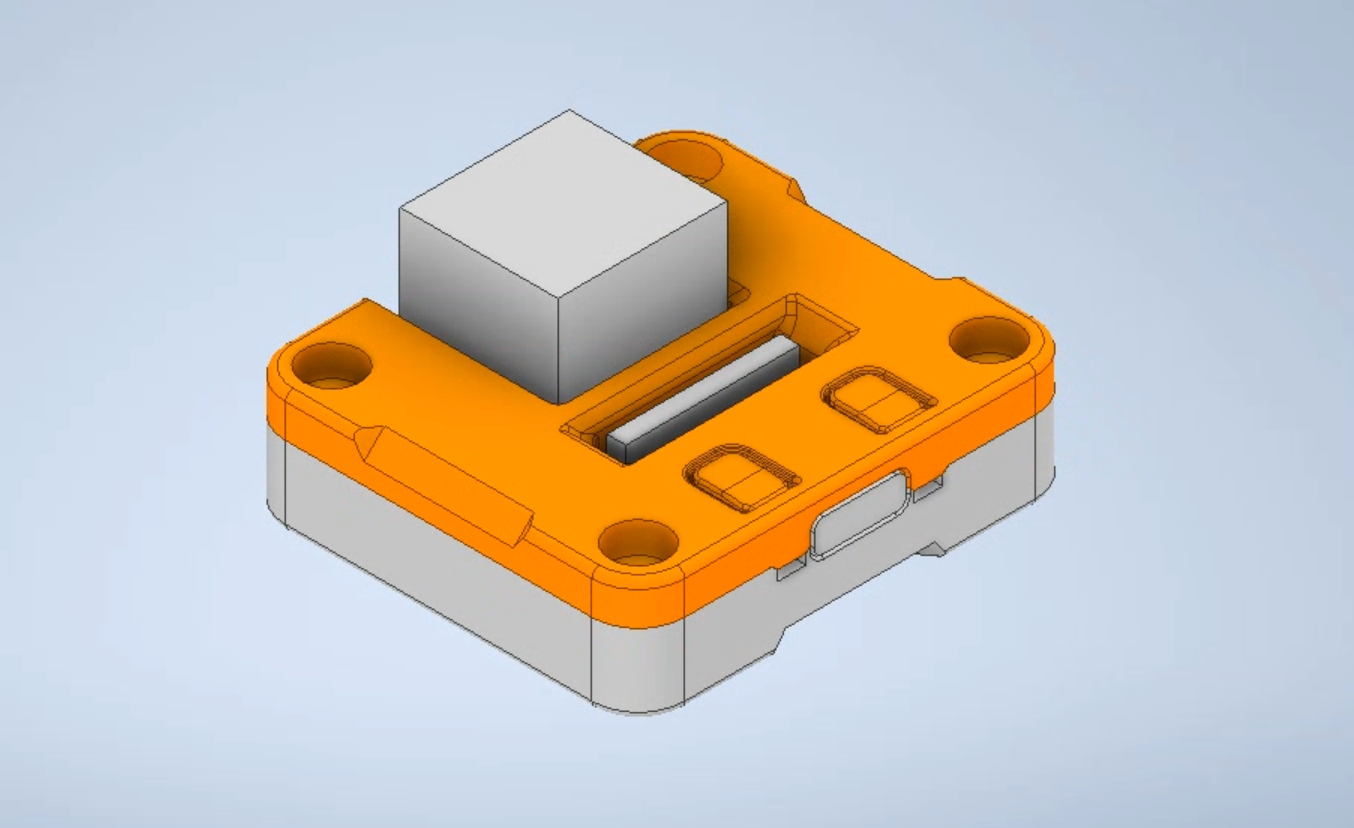
When prototyping embedded systems, developers and designers often obsess over firmware, logic analyzers, and code libraries. Yet one of the greatest sources of friction isn’t code—it’s physical fragility.
Raw microcontroller development boards—like the ESP32 Nano—are typically used as bare PCBs. Exposed header pins bend easily, DuPont jumper wires slip off during minor vibrations, and unsecured boards slide across test benches, causing accidental short circuits.
The Core Philosophy: Maximally Anchorable
The central design requirement for the RV Nano ESP32 Enclosure was simple: Transform an ephemeral development board into a resilient, mountable industrial module without blocking access to any debug pin.
Key Ergonomic Innovations:
- Snap-Fit Friction Tolerance: Zero screws required for core PCB retention. The board clicks into place with a 0.2mm positive snap overhang that absorbs mechanical shock while permitting non-destructive extraction.
- Channelized Cable Strain Relief: Integrated wire conduits guide DuPont ribbons away from hot components, preventing solder joint fatigue during repeated prototyping sessions.
- Multi-Axis Mounting Grid: Recessed neodymium magnet pockets on the underside allow the enclosure to lock onto steel server racks, test benches, or mobile robotic chassis instantly.
┌──────────────────────────────────────────────┐
│  Removable Friction-Fit Top Shell            │
├──────────────────────────────────────────────┤
│  [ ESP32 Nano Board ]                        │
│  - Chamfered USB-C Port Clearance            │
│  - Direct Pin Header Breakout Guides         │
├──────────────────────────────────────────────┤
│  Reinforced Base Chassis                     │
│  - Neodymium Magnetic Pockets (4x)           │
│  - M3 DIN Rail Mounting Clips                │
└──────────────────────────────────────────────┘
Bridging Physical and Digital UX
Physical computing and software design share the exact same foundation: reducing cognitive friction.
Whether you are designing a web UI to reduce user error rates or engineering an injection/3D-printed enclosure to prevent a wire from disconnecting mid-demo, the goal is identical: get the tool out of the way so the user can focus on the work that matters.