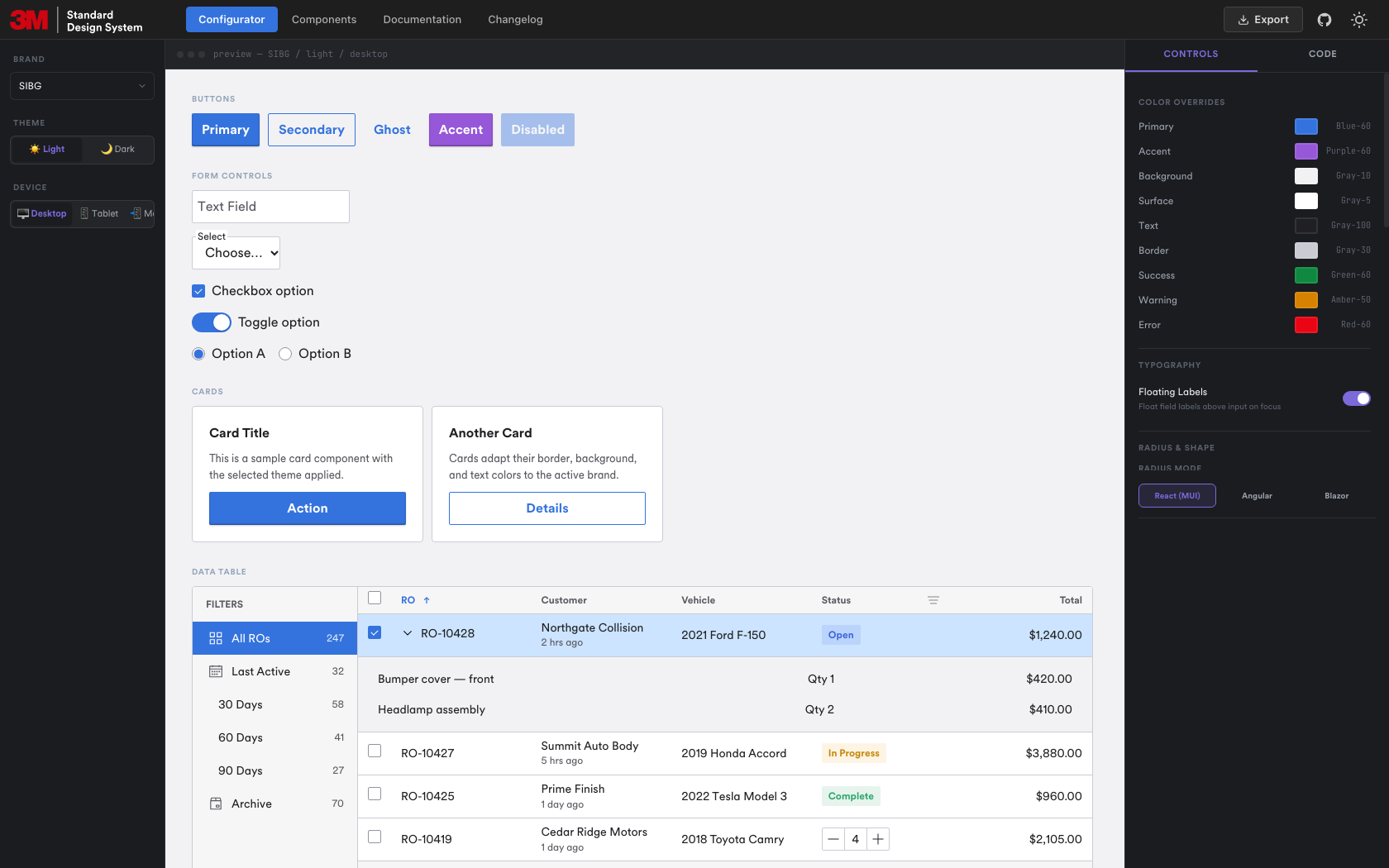
A familiar story plays out across enterprise tech companies every year: A design team spends six months crafting a beautiful UI kit in Figma. They publish a style guide PDF, host a kickoff all-hands, and celebrate the launch of their new “Design System.”
Twelve months later, the system is dead.
Developers have built custom workarounds, designers have detached components, and the production codebase looks just as fragmented as it did before.
Why does this happen? And how do we stop it?
The Three Fatal Traps of Enterprise Design Systems
1. The Monolithic Trap
Assuming that all engineering teams will convert to a single framework (e.g. “We are now a Next.js shop”). In reality, enterprises run legacy Angular apps, enterprise .NET Blazor tools, and modern React dashboards side-by-side. A design system that only supports one framework is only one-third of a system.
2. The Manual Sync Tax
Whenever a color token changes or a corner radius is updated, someone has to manually create tickets, update Figma libraries, edit SCSS files, and ping teams on Slack. The moment maintenance requires human copy-pasting, divergence is guaranteed.
3. The Mandate Fallacy
Executive mandates cannot force engineering teams to love your component library. If your button component is rigid, poorly typed, or difficult to customize for localized edge cases, developers will simply write raw HTML.
The Solution: Mathematics, Automation, and Recipes
In architecting the 3M JUMBO Design System, we inverted these assumptions:
- Tokens as Code: Foundations are defined mathematically (RGB values, spacing ratios, radius curves) in upstream token dictionaries.
- Automated Multi-Stack Compilers: Using headless CLI scripts and AST parsers, one master JSON updates:
- CSS Custom Properties (
--jumbo-color-primary) - Material UI React theme palettes
- Angular Material SCSS variables
- C# .NET Blazor static token classes
- CSS Custom Properties (
- “Recipes, Not Mandates”: We don’t force teams to eat at a fixed-menu restaurant. We stock a clean pantry with verified foundation tokens and provide modular component recipes they can adapt to their requirements.
When updates flow automatically from Figma to npm on every git push, the system stops being an administrative burden and starts being what it was always meant to be: an accelerator for great product work.